
Houston Cattle and Livestock Accident Attorney
You come over a rise or around a curve, and there is a cow, a horse, or a bull standing in your lane. If you were hurt in that crash, the animal's owner may be responsible for your injuries. Under Texas law, that usually takes proof that the owner knowingly let the animal onto a U.S. or state highway, or broke a local stock law covering the road where you crashed. So your case turns on how the animal got loose and what the owner knew.
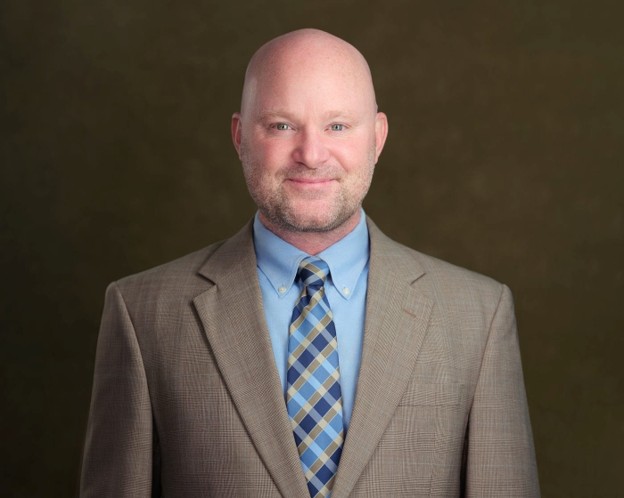
I'm Jeff Todd, a Houston personal injury attorney. I'll look at your livestock crash for free and tell you straight whether it can be won.
No fee unless I win. A live person answers the phone 24/7.
Who pays when you hit a cow on a Texas road?
The owner of the animal can be liable, but only in specific situations. Texas is an open-range state by default, which means a livestock owner has no general duty to keep animals off the road. The Texas Supreme Court confirmed this in Gibbs v. Jackson (1999), a case about a horse on a farm-to-market road.
An owner's duty comes from two places:
The highway statute.
Texas Agriculture Code § 143.102 says a person who owns or controls "a horse, mule, donkey, cow, bull, steer, hog, sheep, or goat may not knowingly permit the animal to traverse or roam at large, unattended, on the right-of-way of a highway." Here, "highway" means a U.S. or state highway.
Local stock laws.
Many counties, and some areas within counties, have adopted stock laws that require owners to keep certain animals from running at large.
If neither exception applies to your crash, the owner usually owes nothing.
Why these cases turn on how the animal got loose
The owner's knowledge decides most livestock cases. A cow on the highway is not enough by itself. You have to show the owner knew the animals were getting out, or knew they were on the road, and let it happen anyway.
Texas courts have drawn the line with real facts:
Facts that tend to support a claim
- The animals got out again and again. In Weaver v. Brink, the owner's cattle escaped several times a year.
- The owner knew a fence or gate was broken and did not fix it.
- The fence was known to fail in bad weather. In Weaver, the water gaps washed out after hard rains.
- Police, deputies, or neighbors had warned the owner. In Weaver, the police chief had told the owner his cattle were loose.
- The owner knew the animal was out and did not round it up.
Facts that tend to defeat one
- This was the first time the animal ever got out.
- The gate was closed and chained, as in Evans v. Hendrix.
- The escape came from a hidden defect, like the broken gate latch in Pruski v. Garcia.
- No one ever told the owner the animals were near the road. In Evans, the owner and a neighbor had never seen the cattle on a road.
- The animals were pastured at the back of the property, away from the highway, as in Evans.
The injured driver won in Weaver and lost in Evans. More examples appear in Texas A&M AgriLife's review of Texas fence law. Every case is different, and results can't be guaranteed.
Call (832) 243-4953Does the road you crashed on change your case?
Yes. The highway statute covers only U.S. and state highways, not numbered farm-to-market roads, so the type of road decides what you have to prove.
U.S. or state highway
- What you have to prove
- The owner "knowingly" let the animal roam on the highway, even in a county with a stock law
- Where the rule comes from
- § 143.102 and Pruski v. Garcia (2020)
Farm-to-market or county road covered by a local stock law
- What you have to prove
- The owner "permitted" the animal to run at large, which courts read as conscious or knowing conduct, not just a weak fence
- Where the rule comes from
- The local stock law and Rose v. Herbert Heirs (Tex. App. 2010)
Road with no stock law (open range)
- What you have to prove
- Usually no claim. The owner generally has no duty to keep the animal off the road.
- Where the rule comes from
- Gibbs v. Jackson (1999)
Which rule covers the exact spot where you crashed is the first thing to pin down.
Is Harris County open range?
No official statewide list answers this. Texas stock laws are usually adopted by local election, and one can cover a whole county or only part of it, and only certain animals. The Texas Association of Counties says the reliable source is the county clerk's election records and commissioners court minutes.
For a crash in Harris County or a neighboring county, those records settle it for the exact location. On a U.S. or state highway, the county's stock law does not change the standard.
What to do now, and how long you have
Get to a safe place, call 911, and get medical care for anyone who is hurt.
If you can do it safely, take photos of the scene, the animal, and any nearby fence or gate.
Write down any markings on the animal.
Get the names and phone numbers of witnesses and neighbors. They may know whose animal it is and whether it has gotten out before.
Call me before you give a statement to the owner's insurance company.
How long do I have to file a livestock accident claim?
In Texas, you generally have two years from the date of the crash to file a personal injury lawsuit (Civil Practice and Remedies Code § 16.003). For a wrongful death claim, the two years generally run from the date of death. Evidence about fences and earlier escapes disappears much faster than that.

What I look for
Knowledge cases are won with evidence gathered early. Fences get repaired and memories fade. The facts I look for include:
- Who owns the animal and who was responsible for it that day
- The condition of the fence line and gates near where the animal got out
- Earlier escapes from the same property
- Calls or reports to the owner or the sheriff about loose livestock
- Whether the owner knew the animal was out before the crash
Can the rancher make me pay for the cow?
Usually not. Under § 143.103 of the Agriculture Code, a driver who hits an unattended animal on a highway is not liable for damage to the animal unless the driver was grossly negligent or hit it on purpose. If the owner or their insurer demands payment for the animal, talk to me before you respond.
How Pruski v. Garcia made these cases harder
On January 31, 2020, the Texas Supreme Court raised the bar for highway livestock claims in Pruski v. Garcia. A bull got onto State Highway 123 in Wilson County and a driver hit it. Wilson County has a local stock law, and the court of appeals let the driver's claim go forward under that law's lower "permit" standard.
The Supreme Court reversed. It held three things:
On U.S. and state highways, the "knowingly permit" standard in § 143.102 controls, even in a county with a stock law. Section 143.107 says the highway rules win any conflict.
There is no common-law duty to fence livestock in Texas. Ordinary carelessness by the owner is not enough.
"Knowingly" means the owner was actually aware. A broken latch the owner didn't know about did not create liability, and the owner won.
Before Pruski, drivers in stock-law counties could argue for a second, easier path. Now, on a highway, the owner's actual knowledge is the whole case. That makes these claims harder to win than they used to be. I still want to hear about yours, and I'll tell you honestly whether the facts are there.
Why these cases are worth a careful look
Hitting a cow or a horse at highway speed can cause serious injuries or death. In my experience, ranch and cattle operations often carry large liability policies, so when the facts prove the owner's knowledge, there can be real coverage behind the claim.
I spent the early part of my career defending insurance companies. I know how the owner's insurer will evaluate your claim, and I know which facts they will attack first. When you hire me, you get me: I personally handle the consultation, the strategy, and the negotiation.
- About 25 years of legal experience
- Free consultation, by phone or in person by appointment
- 33% of the recovery if your case settles before suit, 40% if a lawsuit is filed, 45% on appeal
- No fee unless I win
If a loved one was killed in a livestock crash, see my page on wrongful death claims in Houston. I also handle car accidents, truck accidents, and motorcycle accidents.
Talk to me about your livestock crash
I'm based in Houston and handle cases across the greater Houston area and, for the right case, elsewhere in Texas. Call me and I'll tell you whether the law gives you a claim against the animal's owner, and what it would take to prove it. Trust Jeff.

More cases I handle
 Car Accidents
 Truck Accidents
 Slip & Fall Injuries
 Swimming Pool Accidents
 Premises Liability Distracted Driver Accidents
 Dog Bites & Animal Attacks
 Gun & Shooting Accidents
 Boating Accidents
 Construction Accidents
 Oilfield Accidents Workplace Accidents
 Medical Malpractice
 Health Care Worker Claims
 Product Liability